


Posted by Chris Giallanza on Tue, May 08, 2012 @ 10:47 AM
In-store or online shopping? The retail industry continues to be pulled back and forth. Some have adapted by providing both options to their customers, while others have implemented new ways to profoundly enhance the traditional shopping experience.
Either way, efficient checkout remains one of the most critical aspects of retail.
Supermarket News recently explored what the nation’s largest traditional grocery chain is doing to improve customers’ front-end experience. See the full article here.
Posted by Emma Rudeck on Wed, May 02, 2012 @ 05:13 AM
Retailers expect to have the most accurate and reliable people counting data as part of their retail analytics. They need this information to measure footfall, calculate their conversion, and make essential decisions for operational planning, such as queue management.
Some retailers are beginning to explore the possibility of being selective in who they include in their conversion calculations. For example, counting groups as a single shopper. However, does adding such subjective factors to people counting make for better information?
Should retailers count shopper groups rather than individuals?
One method of including a subjective factor to people counting is to examine the concept of ‘shopper groups’. This is where a group of people, who are together, are counted as a single unit by people counting detectors rather than as individuals.
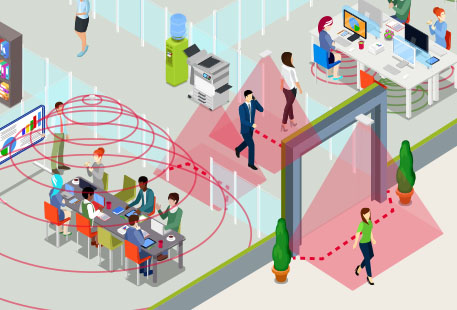
Developments in people counting technology mean it is possible for overhead detectors to calculate shopper groups. This is done through thermal sensors, which can identify the proximity of people. For example, if a family walks into a shop, then their physical closeness will allow people counting detectors to identify them as a single shopping group.
Is measuring shopping groups viable?
In some circumstances, for example families, there are arguments to support the use of this practice. It means that retailers do not have to consider economically inactive individuals as part of their conversion figures. Yet, attempting to distinguish shopper groups can only be a subjective measurement and there are some significant problems with this method.
What are the problems with this method?
While it is possible to measure shopper groups by their proximity, this cannot always be accurate. Although a group may seem to enter a shop together, it is not necessarily the case that they are a single shopping unit. Also, it is possible more than one person in a shopper group will make a purchase. With the added complications of counting people through subjective factors, it creates inaccuracies in the data. Therefore, it remains that to ensure precise data, retailers need to continue to count everyone entering their shop.
Gain further insight into the subject of people counting, retail analytics and subjective factors in our free whitepaper.
Posted by Chris Giallanza on Fri, Apr 20, 2012 @ 10:25 AM
In retail – and in any direct-to-consumer business, for that matter – keeping your customers happy can significantly boost your bottom line. And shorter lines make happier customers, especially at supermarkets.
Each year, Consumer Reports surveys its readers about their grocery store shopping experiences – giving consumers a voice to bring forth any and all concerns. And each year, complaints about crowds, lines and checkouts always seem to be top of mind for many U.S. grocery patrons.
In the 2012 survey results, the No. 1 overall complaint cited by 27 percent of the more than 24,000 respondents was – you guessed it – not enough open checkout lanes. Twenty-five percent pointed out poor selection, long lines or lousy food while 14 percent said they have had enough of the crowds.
Retailers are challenged to find cost-effective ways to keep customers satisfied through the front-end – and this is the age of new technology. Thermal sensors can give retailers an unprecedented advantage over their competition by streamlining checkout processes while gathering critical footfall analytics. Hi-tech checkout management systems offer significant returns on investment, such as:
- Improved customer service;
- Reduced wait time; and
- Manageable labor costs.
For supermarkets, alleviating customers’ top complaint may directly influence their loyalty, a topic on which the survey also touched.
One-third of respondents said they have abandoned a nearby grocery store in the past year for an assortment of reasons – from a search for lower prices to employee rudeness and everything in between, which includes long lines, no open checkouts and crowds.
One of the many definitions for “progress” is movement toward a goal or to a further or higher stage. Eighty-two percent of retail executives said improving customer service would be a priority in 2012, according to the National Retail Federation (NRF) Foundation.
Checkout management technology provides an innovative front-end solution for common customer complaints.
Now that’s progress.
Posted by Richard Strange on Thu, Mar 22, 2012 @ 02:32 AM
It was surprising to see, in a news report in The Grocer on January 14, a quote describing infrared people counting technology as “outdated”. It was surprising because it is incorrect. On the contrary, many retailers have rejected video-based people counting in order to adopt infrared thermal technology.
The Irisys thermal imaging-based solution is the most widely used detector for people counting and queue management in the world, with over 150,000 sensors deployed by retailers, banks and other businesses. The Irisys queue management solution has never been beaten in a competitive, head to head trial, including most recently against the video-based system mentioned in The Grocer article.
Thermal imaging has become the de facto standard
for people detectors, driving intelligent
queue management solutions that can provide accurate reporting on queue length and average wait times, as well as predict checkout requirements for optimal customer service. A number of key factors make it more effective than video-based solutions.
First, the Irisys solutions are fully PCI (Payment Card Industry) compliant, in part because thermal imaging cannot either see or record the PINs being typed into chip and PIN machines. But video solutions have the ability to do this: very easily with high definition video and with a reasonable degree of accuracy using a low resolution camera.
In 2011, following an independent review by SureCloud – a security consultant and approved PCI scanning vendor - they recommended that organisations using video-based people counting and queue management solutions should use an algorithim to blank out the area around a chip and PIN terminal. But this might not always be technically possible; and for such a system to achieve PCI compliance inspectors would need to be certain that blanking had been completed effectively and that it was irreversible. Regular reviews would then be needed to ensure this remained the case. And clearly, any company using mobile chip and PIN devices would find these processes particularly difficult.
None of these issues would be encountered by a company using a thermal solution.
At the same time, concerns about the way video cameras in public places can infringe personal privacy have been expressed in the UK and in many other different countries. Again, privacy is simply not an issue for a company using thermal technologies.
In addition, tests show that thermal systems deliver more accurate results than video when recording the number of people entering a building through wider entrances, such as those commonly used in supermarkets, shopping malls and many other mainstream retail outlets. Thermal solutions are indifferent to changes in lighting conditions, unlike video, which can be adversely affected by bright lighting or dark shadows.
Irisys queue management solutions also require much lower power consumption than video solutions, using 80% less electricity than video requires, so making thermal much more cost effective and a greener option.
Proponents of video claim it produces more accurate measures of customer numbers by using height to distinguish adults from children. But this is a rather arbitrary and crude method, prone to inaccuracies through miscounting shorter adults, taller children, or people affected by a range of medical conditions and disabilities. A retailer seeking to optimise queue management by using this method to differentiate between individual shoppers and a family shopping unit is therefore making the cardinal error in terms of data analysis – starting the process with inaccurate data.
A more effective approach is to accurately count everyone entering a store as a potential customer; and if the business requirement is that children should be discounted this should be done during the analysis of raw data. In terms of optimising queue management, Irisys uses thermal sensors deployed above checkout areas to feed data into sophisticated behavioural algorithms that can accurately tell the difference between a family or group of four people and four separate customers.
Irisys pioneered the use of predictive queue management techniques in 2008, with Morrisons as its launch client in the UK. Tesco also use the technology, to count the number of people queuing at its tills and so keep its ‘one in front’ promise to customers about opening extra tills as soon as queues develop. Recent client wins for Irisys include a deal with a major US grocery chain. Over 4000 stores are now installed globally, serving over 100 million customer per week.
The company’s client base has grown quickly because its technology is so accurate that retailers display wait times and checkout prediction data to customers at the entrance to the store and above the checkouts. Research shows that if customers know queues are short at busy times they are more likely to enter a store. Shorter queues have also been found to help increase basket size.
Infrared, thermal sensor solutions offer increased accuracy in people counting, enabling optimised queue management, in an energy-efficient, cost-effective, non-intrusive, PCI-compliant way, with none of the privacy or security threats associated with a video solution. Outdated? No. Out in front.
Written by: Dr Ian Wilcock, COO, Irisys
Posted by Robert Clarke on Wed, Feb 15, 2012 @ 02:16 PM
Now that we are a few weeks removed from the 2012 NRF Convention and Expo, it’s a good time to look back and reflect on some of the conversations we had at the show.
One of the questions we were asked repeatedly was what made the thermal sensors found in people counters different from some of the others technologies (video, motion) on the market. We thought we would use this space to briefly address that question.
The simple answer is accuracy. Thermal technology provides a high level of count precision and directional counts. Also, because thermal is based on temperature as opposed to visual impressions the technology is not influenced by light conditions and is more versatile than video-based systems. In fact, thermal sensors are sophisticated enough to avoid double counting, meaning they won’t count the same people twice.
When talking about traffic counters, accuracy is of the utmost importance. Obviously, if the data collected from these devices is not correct, then the decisions made from that data will be incorrect as a result.
Next time we will take a look at what decisions can be made from the data collected from thermal-based people counters and how it can help a retailer improve sales and reduce expenses.
Posted by Robert Clarke on Thu, Jan 26, 2012 @ 04:15 PM
Another year, another NRF Convention and Expo in the books, and as much as mobile and social media were trends this year, there remained a concentration on the foundation of retail, customer service. Customer-centricity was the buzz word and it could be seen everywhere. It was clear the new technologies at the show served to enhance the customer experience.
At Irisys, the idea of improving the customer experience is nothing new. Our booth was busy with activity as retailers and vendors alike stopped by to learn how our People Counting and Queue Management solutions could help retail outlets not only gain valuable customer analytics but also improve their overall customer relations.
With Mark Ryski – author of Conversion: The Last Great Retail Metric – signing autographs at our booth, retailers were enthusiastic to learn more about the importance of traffic and conversion analytics and how it can help reduce expenses and improve sales.
Over the next couple of weeks on this blog, we will take a look back at the 2012 NRF Annual Convention and Expo and explore some of the trends and share some of the conversations we had surrounding customer service.
Posted by Robert Clarke on Fri, Jan 06, 2012 @ 10:02 AM
Much like many others in the retail industry, our year kicks off with bang at NRF’s 101st Annual Convention & EXPO in New York. On our last blog post, we touched on the many interactive activities we will have at our booth (2921), and we are truly excited to showcase our technology to the movers and shakers in our line of work.
The true benefit at an event like “Retail’s Big Show” is the exchange of new ideas, something that is inevitable when you gather a large group of innovators. NRF’s flagship conference has excelled at this type of exchange in recent years, and this year’s show will prove no different. With keynote speeches by President Bill Clinton and Executive Vice President of Advertising, Marketing and Corporate Communications at Ralph Lauren Corporation, David Lauren, the show is guaranteed to provide insight and knowledge about the direction of the industry.
With the exchange of new ideas in mind, we invite anyone attending the show to stop by our booth. We are truly passionate about enhancing the in-store customer experience through the correct application of technology and would be interested hearing your ideas surrounding customer service. And, with Mark Ryski – author of Conversion: The Last Great Retail Metric – onsite, you know he will share great insight about retail analytics and how it can positively affect profitability.
NRF’s 101st Annual Convention & Expo is almost upon us. We will be at booth #2921 and we hope to see you there!
Posted by Richard Strange on Tue, Jan 03, 2012 @ 12:49 AM
27 November 2011: Austin Reed has installed visitor analytics at its newly opened flagship store on London’s busy Regent Street, to help the luxury high street retailer deliver its vision for a customer-led service.
The store’s management team is using footfall data to understand conversion rates and explore shopper flow around the 20,000 square feet of prime London retail space. Staff at Austin Reed can also use the data to match staffing levels to visitor patterns and ensure the optimum approach for service and sales conversion.
At the heart of the system, installed by Experian FootFall, are eighteen infrared people counting detectors supplied by Irisys. The non-intrusive and discrete ceiling-mounted detectors accurately measure and track footfall and the flow of customers around the store.
Steve Richardson, UK & I regional director Experian FootFall, commented: “Austin Reed has a fundamental understanding of the benefits that customer counting can bring. We have worked with them to help deliver innovative performance data for the Regent Street store. This will enable the company to measure conversion rates over a given period to help boost sales in the future.
Stewart Briggs, retail operations manager, from Austin Reed explained: “Over the last few months FootFall has really grasped what we are looking for from our visitor analytics data and has delivered a solution that fits our vision for customer-led service for this critical store location. We are looking forward to engaging with Experian FootFall further once the new store has opened.”
Posted by Robert Clarke on Mon, Dec 26, 2011 @ 09:50 AM
NRF 101st Annual Convention and EXPO is right around the corner. Next month, many of the world’s largest retailers and partners will converge on New York to share ideas, make connections and showcase the latest and greatest in retail technology. Of course, Irisys will be there highlighting our thermal checkout line management and people counting solutions.
This year our booth is all about interactivity. We will have experts on hand to discuss how infrared and thermal solutions can improve customer service and boost sales. And for those looking for the full experience, we will have the technology in action. Visitors who stop by our booth will have an opportunity to see themselves as thermal images on screen, and can also post it to Facebook and Twitter. It’s military technology applied to retail – how cool is that?
Plus, Mark Ryski – author of Conversion: The Last Great Retail Metric – is giving away signed copies of his book. Mark, founder and chief executive of Headcount Corporation, is a respected author and a known expert in traffic and conversion analytics. We invite everyone to stop by, get a signed copy of his book and discuss his passion for retail metrics. Mark is a wealth of knowledge, and his book is a must read for retailers.
Visitors who stop by our booth (2921) can also register to win a $1000 Visa Gift Card.
Posted by Robert Clarke on Mon, Nov 21, 2011 @ 07:31 AM
Holiday decorations are out, which can only mean one thing – the most infamous day of shopping, Black Friday, is right around the corner. Last year, according to the National Retail Federation, 212 million shoppers got out of bed and went to their favorite store or online retailer to catch the best sale of the year.
Before taking on the Black Friday challenge, consumers and retailers alike must be prepared…but how?
We have seen enough pictures of outrageous lines to know that Black Friday is not a day for casual browsing. The goal for every consumer should be to get in and quickly and get out. Standing in long lines at 3 a.m. in late-November can be chilly, so pack extra warm clothes, gloves and a hot cup of coffee. Do your research before you get to the store and focus only on what you came to buy.
Black Friday isn’t easy on retailers either. First and foremost, be sure you are adequately staffed. The more staff on hand to guide savings-minded customers or through lengthy checkout lines, the better. Also, utilize technology. New retail technologies can help evaluate shopping trends, which in turn, will help manage staffing levels and maintain efficiency throughout the store.
Most importantly, keep calm and be patient. Consumers, when a store runs out of your favorite toaster two minutes after the doors open, don’t take it out on the store clerk. And retailers, when a customer yells because the checkout lines are miles long, avoid yelling back – after all it is just part of the Black Friday fun!